Bespoke vs Off-the-Shelf Furniture: What Really Changes
Key Takeaways
- Off-the-shelf answers fast and affordably, when standard sizes are enough.
- Bespoke fits the room to the millimetre and rises to the ceiling — that's its real advantage.
- The cost of bespoke comes from workshop time and the choice of material.
- Choose on dimensions, use and durability — not on a reflex about price.
- The ranges given are indicative — ask the workshop for a precise estimate.
When you face a shortage of storage, an atypical wall or an unused corner, the first question isn’t usually “what material?” — it’s “will a standard piece do, or should I have it made to measure?”. That’s the right question, but it’s often answered too quickly, guided by the price tag in a showroom. Because between an off-the-shelf piece and a bespoke one, the difference isn’t just a gap in budget: it touches lead time, fit, material, durability and, finally, how you use the object every day. This guide breaks down what genuinely changes between the two options, so you choose for your room and your needs — not on reflex.
Off-the-shelf: available immediately
Off-the-shelf furniture (also called standard) is produced in series, at standardised sizes: the common widths of 30, 40, 60, 80 or 90 cm, and standard heights and depths. You order it in a store, it’s often delivered quickly, and it’s assembled by you or with a little help. Its strengths are availability, price and predictability: you know what you’re buying, what it costs and when it arrives. Its limits are just as clear: it won’t fill an in-between width, won’t reach the ceiling, leaves a gap above or at the sides, and its finishes are the catalogue’s, not your project’s. For many spaces, though, that’s perfectly enough.
Bespoke: accuracy above all
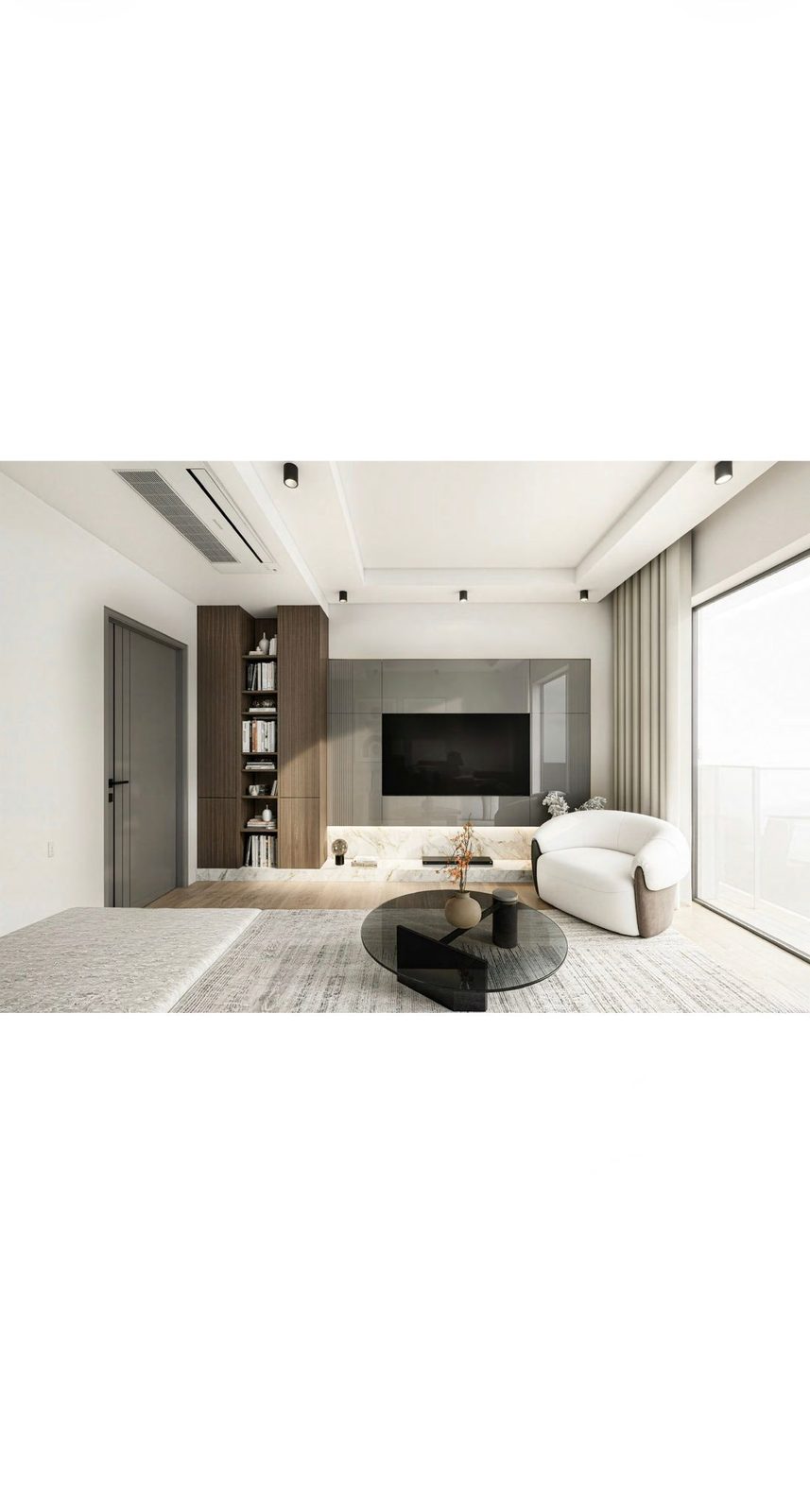
A bespoke piece, by contrast, doesn’t exist until it’s made. It’s measured on site, designed for the exact dimensions of your room, cut and assembled in a workshop to your choice of material and finish. It follows the walls, exploits the corners, rises to whatever height is needed and can be designed for a precise use — double hanging for long dresses, a wine drawer, cable management for a desk. Bespoke wins as soon as your room falls outside standard sizes, when you want to reclaim space by exploiting height or angles, or when material and finish matter to your project. Its flip side: the fabrication lead time and a higher budget.
What really changes: the five differences
Put the two options side by side, and five points deserve to be weighed properly:
- Fit: off-the-shelf leaves gaps, lost height or an awkward line at the ceiling; bespoke occupies every usable centimetre.
- Lead time: standard ships in days to a few weeks; bespoke is made over several weeks in a workshop, design included.
- Material and finish: the catalogue offers what exists; bespoke chooses the wood species, finish and hardware piece by piece.
- Durability: good bespoke work lasts, can be repaired and ages elegantly; standard is often built to be replaced.
- Cost: standard is more accessible at purchase; bespoke is a higher investment, but sized to your room and your use.
You’re not choosing between two pieces of furniture; you’re choosing between two ways of giving a place to what you own. Off-the-shelf dresses the space; bespoke occupies it.
The cost: what we’re really talking about
The price of an off-the-shelf piece is simple to compare: it’s on the tag. The price of a bespoke piece is made up of design, workshop time, the chosen material and installation — it appears in the quote, not in a catalogue. As pure guidance, expect bespoke to cost more than a comparable standard piece of the same volume, because it includes hand fabrication and cutting to your dimensions. But that headline figure doesn’t tell the whole story: bespoke often saves you buying extra units to fill a gap, and it lasts longer. Exact ranges depend on your room and your choices — describe them to a workshop for a concrete estimate, and compare on the same scope of work.
When off-the-shelf is more than enough
There are cases where aiming for bespoke is pointless: if your space matches the common sizes, if the budget is tight, if the lead time matters most, or if the piece is temporary (a rental, a transition). A good standard piece, well chosen and well assembled, genuinely serves:
- Your width or height falls exactly on a standard size and nothing is lost.
- You need a quick, affordable or temporary extra piece.
- The catalogue’s style and material suit you and the stock finish is enough.
- The room is about to change use soon, and the piece will have to move with you.
When bespoke is the right call
Bespoke becomes the better option as soon as an existing piece leaves something on the table: space lost above, a gap at the side, an unused corner, a ceiling height a shame to leave empty. It’s also the right call for a precise use — a wardrobe designed around your actual clothing, a kitchen that truly integrates appliances, a bookcase that follows a wall end to end — or when material and finish matter enough to deserve an object that lasts. If your room falls outside standard sizes, if you want to reclaim space without losing floor area, or if you’re looking for a one-of-a-kind piece, bespoke is a rational investment, not an indulgence.
The right choice is made on the ground
In short, there’s no universal answer: the right decision turns on dimensions, use and durability, not on a reflex about price. Take the room’s measurements, list your constraints and real use, set an indicative budget and a date — that’s the only basis for deciding with confidence. For context, the practical guides on Hausinfo (the Swiss housing portal) and the construction and housing statistics from the Swiss Federal Statistical Office (OFS/BFS) offer useful reference points on housing in Switzerland; Egger’s material resources help you understand the panel ranges and finishes available. Either way, a workshop that measures on site and itemises its quote is your best partner in deciding between the two options.
Unsure between standard and bespoke? Tell us about your room and how you use it on WhatsApp at +41 79 888 47 73: we’ll tell you honestly which option is smartest, with a clear plan and quote, no obligation.